
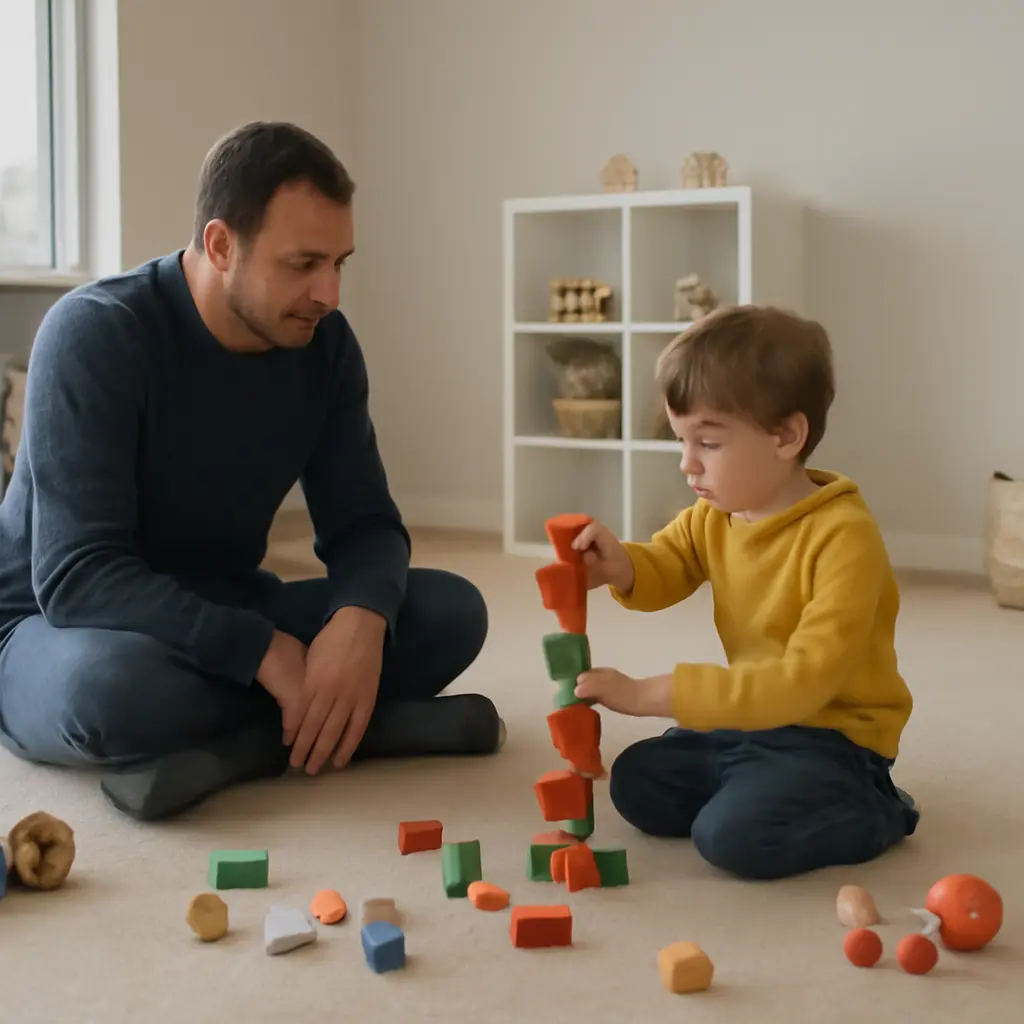
Self-directed play is child-chosen activity in which children decide what to do, how to do it, and when to change or stop, within safe boundaries. It can help strengthen emotional resilience—the capacity to experience stress or disappointment, adapt, and recover—by giving children repeated, low-stakes chances to make choices, manage frustration, and try again. Research supports the value of play for learning and well-being, but it does not establish that self-directed play alone causes resilience or guarantee the same benefits for every child. Understanding what counts as self-directed play, how it may support emotional skills, and how adults can make room for it offers a practical way to support children without turning play into another performance task.
Self-Directed Play Builds Skills That Support Emotional Resilience
Self-directed play is often called child-led, free, or unstructured play. These terms overlap, but they are not identical: free play generally emphasizes the absence of adult direction, while child-led play can include an adult who follows the child’s ideas without taking control. In its 2018 clinical report on the importance of play, the American Academy of Pediatrics describes play as intrinsically motivated activity that is pleasurable and actively engaging, and notes that it can support social-emotional development and stress regulation.
Resilience is not simply “toughness” or never feeling upset. The Harvard Center on the Developing Child describes resilience as a process of adapting well in the face of adversity, shaped by supportive relationships and opportunities to develop coping skills. Self-directed play can contribute to that process by letting children encounter manageable challenges while retaining some control over their response. It is one supportive experience among many—not a substitute for responsive caregiving, mental-health care, or addressing serious sources of stress.
Free and Unstructured Play
Unstructured play has no fixed adult-set outcome. A child might build a block tower, invent a game, draw, or turn a cardboard box into a spaceship. The child chooses the activity and can revise the plan. This freedom creates opportunities to test ideas, tolerate small setbacks, and decide whether to persist, change tactics, or take a break. The American Academy of Pediatrics distinguishes this kind of play from activities organized around adult instruction or a predetermined result.
Child-Led Play With a Supportive Adult
Child-led play does not mean adults must be absent. A caregiver can provide materials, ensure safety, and show interest while allowing the child to set the direction. For example, instead of correcting a pretend shop’s rules, an adult might ask, “What happens next?” This approach preserves the child’s agency while keeping a caring adult available. The distinction matters: supportive presence can offer security, whereas taking over every decision can reduce the child’s opportunity to practice independent problem-solving.
Outdoor and Risk-Aware Play
Outdoor play can involve running, climbing, balancing, exploring, and negotiating shared space. Risk-aware play means allowing age-appropriate challenge while managing hazards; it is not the same as leaving children unsafe. The American Academy of Pediatrics’ 2022 policy statement on preventing childhood toxic stress recommends safe, stable, nurturing relationships and environments. Adults can support exploration by setting clear boundaries—such as where children may climb—while avoiding unnecessary intervention in every minor difficulty.
Self-Directed Play Gives Children Practice With Emotional Skills
The link between play and resilience is best understood through the skills children may practice during play, rather than as a guaranteed outcome. When a game changes, a structure collapses, or a peer disagrees, children can experience frustration in a setting that is often flexible and recoverable. With time and supportive relationships, these experiences may help build emotional regulation, persistence, and confidence.
Managing Frustration and Regulating Emotions
Emotional regulation is the ability to notice and manage feelings in ways suited to a situation. A child who cannot fit two puzzle pieces together may pause, try another piece, ask for help, or walk away and return later. Play gives children chances to encounter feelings without requiring them to hide those feelings. Adults can acknowledge emotions—“That tower falling was frustrating”—and leave room for the child to choose what to do next.
The National Scientific Council on the Developing Child explains that self-regulation develops over time through interactions between children and their environments. Play is not a stand-alone treatment, but everyday opportunities to make choices and recover from small setbacks can provide practice. If distress becomes intense, persistent, or interferes with daily life, caregivers should seek guidance from a pediatrician or qualified mental-health professional rather than expecting play alone to resolve it.
Problem-Solving, Persistence, and Adaptability
Resilience involves adapting when a first plan does not work. In self-directed play, children may discover that a bridge made of blocks collapses or that a pretend game is not working for everyone. They can test alternatives, simplify a goal, or invent a new rule. These are small examples of flexible problem-solving, a capacity also supported by the Center on the Developing Child’s work on executive function and self-regulation.
A useful adult response is to ask a genuine, non-leading question such as, “What could you try?” rather than immediately fixing the problem. The goal is not to make children persist at all costs. Knowing when to change direction, seek support, or stop is also adaptive.
Agency, Confidence, and Social Negotiation
Agency is a child’s experience of having meaningful influence over their actions. Choosing roles in pretend play, deciding how to use art materials, or negotiating a game can help children experience themselves as capable participants. When play involves peers, children may also practice expressing preferences, listening, taking turns, and repairing disagreements. These interactions can support social confidence, although they may need adult help when a conflict becomes unsafe or persistently unequal.
Research Supports Play’s Value, With Important Limits
Evidence on play includes pediatric guidance, developmental research, and studies of particular play settings. A 2018 review by the American Academy of Pediatrics concluded that play supports healthy development and can help children build relationships and manage stress. The organization’s 2022 report on toxic stress also emphasizes the importance of supportive relationships and safe environments. These sources make a strong case for protecting opportunities to play, but they do not provide a single statistic showing that a set number of minutes of self-directed play produces a specific increase in resilience.
That distinction is important when interpreting research. Studies may examine different ages, definitions of play, and outcomes, and many cannot separate play’s effects from family support, community conditions, or other experiences. A sensible conclusion is that self-directed play offers plausible and developmentally valuable practice in coping and decision-making, while resilience develops through a wider network of relationships and circumstances.
What the Evidence Can—and Cannot—Show
Research can identify associations between play and developmental outcomes, test specific interventions, and explain possible mechanisms such as emotion practice or peer negotiation. However, association does not prove that play caused an outcome. A child who has more time and space to play may also benefit from other advantages, including attentive caregivers or access to safe outdoor areas. For this reason, claims should focus on play as a helpful opportunity, not a guaranteed resilience intervention.
A Practical Example: The Falling Block Tower
Imagine a child building a tall tower that falls just before completion. The child may feel disappointed, decide to rebuild with a wider base, ask someone to hold a block, or choose a different project. Each response offers a chance to practice noticing frustration and selecting a next step. An adult can stay nearby, keep the situation safe, and offer comfort if needed without insisting that the child finish. This everyday example illustrates a possible pathway from play to coping; it is not proof that one episode creates lasting resilience.
Families and Educators Can Make Room for Self-Directed Play
Supporting self-directed play does not require expensive equipment or a specially designed program. It does require time, accessible materials, reasonable safety, and adults who can resist directing every moment. The National Association for the Education of Young Children recommends developmentally appropriate practice that respects children’s interests, development, and context—principles that align with offering meaningful choices and play opportunities.
Protect Time and Offer Open-Ended Materials
Provide stretches of play that are not constantly interrupted by instructions, transitions, or scheduled activities. Simple materials—blocks, paper, washable art supplies, dress-up clothes, household containers, or outdoor objects—can be used in many ways. Open-ended resources invite children to create their own goals rather than follow a single prescribed result. If time is limited, even a predictable daily window can help establish a routine.
Follow the Child’s Lead While Keeping Boundaries
Adults can describe what they notice, show curiosity, and join when invited, while leaving the child in charge of the play’s direction. Set clear limits for safety and respect—for instance, materials stay on the table, and bodies are not used to hurt others. Within those limits, allow manageable uncertainty and avoid correcting harmless choices simply because there is a more efficient way to do something.
Adapt Play to Age, Ability, and Access
Children differ in temperament, disability, sensory preferences, language, and experience. Some may need adapted tools, a quieter space, a familiar adult nearby, or help entering group play. Self-directed does not mean unsupported: thoughtful accommodations can make genuine choice possible. Families and educators should also consider access to safe places, since not every child has a private yard, nearby park, or plentiful play materials.
Conclusion: Protect Play as One Part of Resilience
Self-directed play gives children room to make choices, meet manageable challenges, and practice responding to frustration, change, and social negotiation. Pediatric and developmental sources support play’s broader value, while the research does not justify promising that play alone will make a child resilient. Adults can help by protecting unhurried play, offering flexible materials, following children’s ideas, and maintaining safe, supportive boundaries. Families and educators can start with a small step: set aside regular child-led playtime and observe when a child wants space, encouragement, or help. For further guidance, consult the American Academy of Pediatrics, the Harvard Center on the Developing Child, and the National Association for the Education of Young Children.
Sources: American Academy of Pediatrics, “The Power of Play: A Pediatric Role in Enhancing Development in Young Children,” Pediatrics, 2018, https://publications.aap.org/pediatrics/article/142/3/e20182058/38649/The-Power-of-Play-A-Pediatric-Role-in-Enhancing; American Academy of Pediatrics, “Preventing Childhood Toxic Stress: Partnering With Families and Communities to Promote Relational Health,” Pediatrics, 2022, https://publications.aap.org/pediatrics/article/148/2/e2021052582/179744/Preventing-Childhood-Toxic-Stress-Partnering-With; Harvard University Center on the Developing Child, “Resilience,” https://developingchild.harvard.edu/science/key-concepts/resilience/; National Scientific Council on the Developing Child, “Children’s Emotional Development Is Built into the Architecture of Their Brains,” Working Paper No. 2, https://developingchild.harvard.edu/resources/working-paper/wp2/; National Association for the Education of Young Children, “Developmentally Appropriate Practice,” https://www.naeyc.org/resources/position-statements/dap